


October 30, 2026, 7:05 pm | Read time: 10 minutes
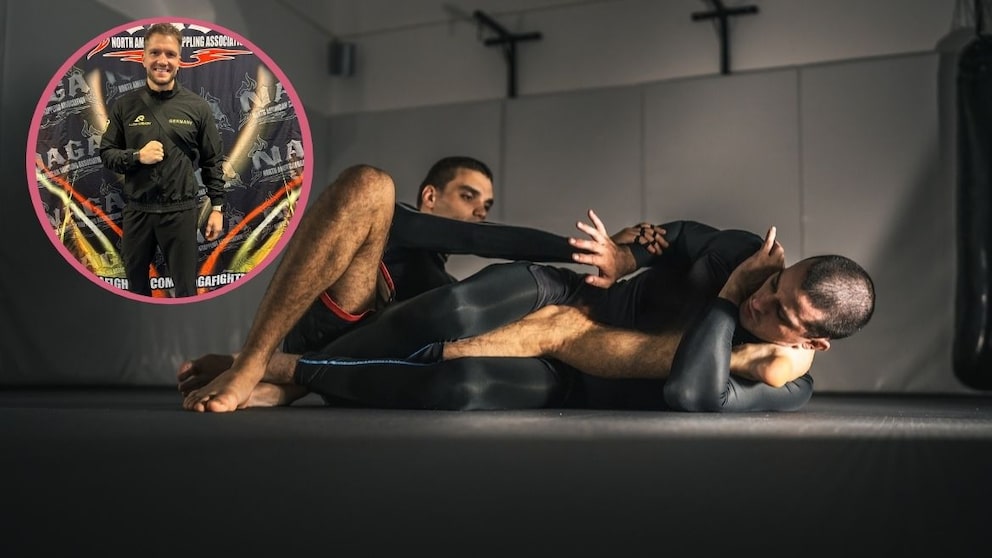
For nearly ten years, extreme situations were part of Dominik Lehr’s daily work life. The former SEK officer and trainer is used to performing under pressure. At the beginning of the year, he faced a completely different challenge–and surprisingly won a world championship title in grappling. This martial art focuses on forcing the opponent to submit using holds and leverage techniques, without punches or kicks. The remarkable part: He had only six weeks of targeted preparation for the competition. How did his spontaneous participation come about, and what was his secret to success? FITBOOK spoke with him about it.
“This makes grappling interesting for police work too”
FITBOOK: Mr. Lehr, for those unfamiliar with the sport: What exactly is grappling?
Dominik Lehr: “Grappling is a mix of various martial arts, including wrestling, judo, and jiu-jitsu. The fight starts standing and often ends on the ground. The goal is to control the opponent and force them to submit using specific techniques, such as joint locks and chokeholds. Unlike other martial arts, punches and kicks are not allowed. This makes grappling interesting for self-defense and police work. However, the techniques can cause serious injuries if the opponent doesn’t submit in time.”
You originally just wanted to accompany a friend to the world championship in New York. How did you end up on the competition mat yourself?
“My friend and athlete Karim, whom I’ve been coaching in athletic and mental training for years, had won the German championship and wanted to compete in a world championship one last time before ending his active career. He asked if I would accompany and support him in New York. My martial arts trainer pointed out that I could also register in my weight class without having to qualify beforehand. So I thought: Why not? If I’m flying to New York, I might as well take this opportunity.”
What personally attracts you to this sport?
“Grappling is incredibly technically demanding. I like to call it human chess. Even if you’re physically inferior, you can win a fight with the right technique. There are countless ways to specialize. Some fighters focus on arm locks, while others prefer to attack the legs. I find it particularly exciting that in a competition, you often face opponents who don’t know your fighting style. That can be a decisive advantage.”
Also interesting: Ex-SEK officer: “Mental strength is not something you’re born with”
“I’ve been training in grappling since I was 16”
You had only six weeks to prepare specifically for the competition. How did you approach it?
“First, I should say that I’ve been training in grappling since I was 16, albeit with interruptions. Even during my time with the police and later with the SEK, these techniques played an important role. So I already had a good foundation. In the six weeks before the world championship, I focused almost daily on grappling. I deliberately chose only three techniques and trained them repeatedly until I truly mastered them. In sparring, I applied them against different opponents to simulate as many situations as possible. This was complemented by athletic and mental training.”
Why did you limit yourself to just three techniques?
“I wanted to master these few movements so well that I could reliably execute them under competition pressure. My training partners knew my fighting style, of course, and could adjust to it. My opponents at the world championship, however, did not. That was a big advantage.”
You also deliberately lost weight before the competition. Why?
“I intentionally reduced my body weight to compete in a lower weight class. I wanted to gain a physical advantage by doing so. When you come from a higher weight class and reduce your weight accordingly, you face lighter opponents in the competition.”
So the strategy paid off?
“Yes. I was able to implement my fight plan and apply the techniques I had intensively trained. In the end, I took first place in my category. For me, it was an important realization: It’s not necessarily about training as much as possible, but rather about setting the right priorities.”
A promise Dominik Lehr didn’t want to break
You followed through with your preparation almost daily. Many people struggle to exercise regularly alongside their jobs. What helps to stay consistent?
“A key point is setting concrete goals. For me, the world championship in New York was a clear goal to work towards. I even publicly announced my participation on Instagram. This created an additional commitment for me to actually follow through with my plan. But it also works on a smaller scale. For example, if someone wants to get fitter or lose weight, they can tell friends about it and ask for their support. When others know about your goals and accompany you, it often becomes easier to stay on track.”
Is it enough to set a concrete goal?
“What’s important is that you can influence this goal yourself. Instead of planning to lose three kilograms in a few weeks, it’s better to aim to exercise three times a week. How quickly the weight drops depends on various factors. Water retention or hormonal fluctuations can affect the scale’s result. Whether you train regularly, however, is largely in your own hands. Therefore, you should focus on things you can actually control.”
“Does my body really need a break right now?”
What happens if you’ve resolved to exercise, but feel completely exhausted the next morning? Should you train anyway?
“You have to distinguish: Does my body really need a break, or is my inner sloth just looking for an excuse? Those who train intensively must give their bodies enough time to recover. After all, the actual adaptation to the training stimulus occurs during recovery. Sometimes a break is exactly what’s needed. However, if you don’t want to train just because you watched TV too late the night before and are tired, you should question your behavior. The key is to be honest with yourself.”
How do you personally determine if your body needs a break?
“I use tracking devices that measure my resting heart rate and heart rate variability. These values can indicate how stressed my body is. After particularly intense competitions, I’ve noticed that my resting heart rate was significantly elevated and my heart rate variability had dropped sharply. My body had experienced enormous stress and needed recovery. In such situations, it wouldn’t make sense to just keep training.”
What’s in Dominik Lehr’s supplement cabinet
In addition to training and recovery, supplements play an important role for many athletes. Did you also rely on them during your world championship preparation?
“Yes, but I approach the topic much more relaxed than I used to. Back then, I almost made a science out of supplements and checked my blood values about every three months to adjust my intake accordingly. Today, I largely stick to the basics. For me, that includes magnesium, zinc, omega-3 fatty acids, vitamin D, and creatine. I still base my intake on my blood values, but now I only check them about once a year.”
Is there a supplement where you notice a particularly significant difference?
“Yes, a vitamin B complex with vitamins B6 and B12. I’ve had very good experiences with it personally. When I take it in the morning, I feel like my energy level increases significantly.”
So you’ve consciously reduced your intake over the years?
“Exactly. My mentor, for example, recommended in his book to skip supplements at least one day a week. The idea is that the body might respond more sensitively to the substances again. I find this approach interesting.”
“If I come in last, I’ve still learned something”
You prepared physically and technically. But how did you deal with the thought of competing in a world championship against possibly much more experienced opponents?
“I consciously told myself that there are certain things I can’t control. Whether my opponent has been practicing martial arts for 15 years longer or is possibly better prepared is beyond my control. So I don’t waste thoughts on it. Instead, I focus on implementing my own fight plan and delivering the best performance I can. If I end up first, that’s great. If I come in last, I’ve still gained experiences I can learn from. This mindset takes a lot of pressure off me.”

BJJ black belt holder: “This is what Brazilian Jiu-Jitsu does to your personality”

How COVID-19 Has Changed Our Lives
One needs battle cries, the other needs calm
Did this approach also help you in coaching your athlete?“With Karim, I actually had to take a completely different approach. He needs a very dominant speech before a fight. You have to emotionally activate him and convey that he will defeat his opponent. This helps him build the necessary competition energy. For me, the opposite works. I need to calm myself and remind myself that I’m optimally prepared. These different approaches have shown me once again how individual mental preparation must be.”
Does that mean not every athlete should be as tense and full of adrenaline as possible before a competition?
“Exactly. What motivates one athlete can block another. Some need strong emotional activation, while others need to consciously reduce their stress to perform at their best. That’s why it’s important to find out which type of preparation suits your personality. There’s no method that works equally well for everyone.”
“It’s worth not constantly looking for quick fixes”
Looking back on your preparation and world championship success: What can people take away from it who don’t aim to win a world championship but just want to get fitter?
“That it’s worth going about it deliberately and not constantly looking for quick fixes. Many people want to see results as quickly as possible and therefore keep trying new methods. What’s often missing is a long-term change in their own habits. Additionally, many try to do everything on their own. When they fail, their confidence in their abilities often suffers. That’s why I believe a supportive environment is incredibly important.”
What role did your own environment play during your preparation?
“A very big one. My trainers and training partners supported me intensively and were available as sparring partners. This allowed me to improve specifically and have people around me who pursued the same goal. I see the same thing with my coaching clients. It makes a big difference whether you constantly have to justify your new habits or are surrounded by people who support, motivate, and occasionally challenge you.”
What would you advise someone who has tried multiple times to exercise regularly but keeps failing?
“They should stop looking for the next shortcut and instead think about what a long-term change might look like. This includes setting realistic goals, developing a suitable plan, and possibly seeking support. The key is not to achieve as much as possible in a few weeks. What’s much more important is developing habits that you can maintain permanently.”